Move Your Entire CRM — Contacts, Pipelines, Notes & History — Without Losing a Single Record
Zero Data Loss. Clean Migration. New CRM Live in 7 Days.
Switching CRMs is terrifying when you have years of contact history, deal notes, pipeline data, and custom fields to move. DIY exports break formatting, lose notes, miss custom fields, and duplicate records. We migrate your entire CRM — contacts, companies, deals, pipeline stages, notes, activity history, tags, and custom fields — with a pre-migration audit, verified transfer, and post-migration count check. Zero data loss. New CRM fully operational in 7 days.
Why DIY CRM Migrations Go Wrong — Every Time
A CRM export is not a migration. "Download CSV, import to new CRM" loses data, breaks relationships between records, duplicates contacts, and misses years of notes and history. Here's what actually goes wrong.
CSV Exports Create Thousands of Duplicate Contacts
When you export contacts from a CRM and import to another, duplicate records are almost inevitable — the same contact appears as John Smith, john@company.com, and John at Company across different exports. A migration without deduplication logic means your new CRM starts with corrupted data.
Notes, Activity History & Deal Context Don't Survive a CSV Export
A CSV export captures flat fields — name, email, phone, status. It doesn't carry notes, activity logs, email threads, deal history, or linked relationships between contacts and companies. Three years of sales context — what was said on each call, what stage each deal reached, who owns what relationship — disappears in a DIY import.
Custom Fields Don't Map Automatically to the New CRM
Every CRM has different field structures. Your source CRM's "Lead Score" field doesn't automatically map to the right field in your destination CRM. Without explicit field mapping, custom data ends up in the wrong place — or gets dropped entirely. You lose the qualification data you spent years building.
Contact-Company-Deal Relationships Break During Import
In a CRM, contacts belong to companies, and deals belong to contacts. When you migrate each record type separately in CSV exports, these relationships break — deals become orphaned, contacts lose their company association, and your pipeline becomes a flat list of disconnected records you have to manually re-link.
A proper CRM migration preserves every record, every relationship, and every note. Here's how we do it.
How Your CRM Migration Gets Done — Zero Data Loss in 7 Days
Every migration starts with a pre-migration audit so we know exactly what's in your source CRM — then we map, migrate, and verify every record before you switch over.
Pre-Migration Audit
We count every record type in your source CRM — contacts, companies, deals, notes, custom fields, tags — and document the exact field structure so nothing is missed or assumed.
Field Mapping
We map every field from your source CRM to the correct field in the destination CRM — including custom fields, tags, pipeline stages, contact statuses, and deal types. Nothing goes to the wrong place.
Data Cleanup
Before migrating, we deduplicate contacts, standardize phone and email formats, normalize field values, and flag records with missing data — so your new CRM starts with clean data.
Migration & Verification
We run the migration and immediately verify: record counts match, relationships are intact, notes carried over, custom fields are in the right place, and no records are missing.
Handover & Support
We hand over a verified migration report — total records migrated by type, deduplication count, field mapping documentation — and 30 days of support for any post-migration questions.
What Gets Migrated — Everything
No cherry-picking — every record type migrated, verified, and documented.
We migrate the complete data structure of your source CRM — not just a contact export. Every relationship, every note, every custom field, and every pipeline record moves to the destination CRM with its context intact.
Common CRM Migration Paths
Any CRM → GoHighLevel
The most common migration type we handle — moving from HubSpot, Keap, Salesforce, Pipedrive, or a custom CRM to GoHighLevel. Contacts, pipelines, custom fields, and history all migrated and verified.
Keap / Infusionsoft → HubSpot
Complex migrations due to Keap's unique contact and campaign structure. We handle the field mapping, tag translation, and contact deduplication that make Keap-to-HubSpot migrations particularly difficult.
Spreadsheet → Any CRM
Initial CRM imports from Google Sheets, Excel, or CSV files — with column mapping, data cleanup, deduplication, and proper field assignment so you start with a properly structured CRM.
HubSpot → GoHighLevel
HubSpot contact properties, companies, deals, and workflows migrated to GHL's equivalent structure — contacts to contacts, companies to companies, deals to opportunities, with custom properties mapped.
Salesforce → HubSpot
Salesforce Leads and Contacts merged and cleaned, Accounts migrated to HubSpot Companies, Opportunities migrated to Deals — with the Salesforce field complexity translated to HubSpot's structure.
Custom CRM → Major Platform
Legacy or homegrown CRM systems migrated to GoHighLevel, HubSpot, or Salesforce via API export. We work with your development team to extract data correctly, then migrate and verify on the destination.
What Makes Our Migrations Different
Pre-Migration Audit
We count every record in your source CRM before starting. You know exactly what's being moved — contacts, deals, notes, custom fields — before we touch anything.
Data Cleanup Included
Deduplication, phone standardization, email validation, field normalization — your new CRM gets cleaner data than your old one. Not a copy of whatever mess exists now.
Post-Migration Verification
We verify record counts match after migration and spot-check a sample of migrated records. If anything is missing or wrong, we fix it before we sign off.
Why AutomateX360 for CRM Migration?
- 50+ CRM migrations completed — founder personally delivers every project
- Pre-migration audit + post-migration verification on every project
- Data cleanup included — you get better data, not a copy of the mess
- 4.9/5 rating across 47 verified reviews on Upwork and Fiverr
- Relationship integrity preserved — no broken contact/company/deal links
- 30 days post-migration support on every project
Real CRM Migrations — Real Client Results
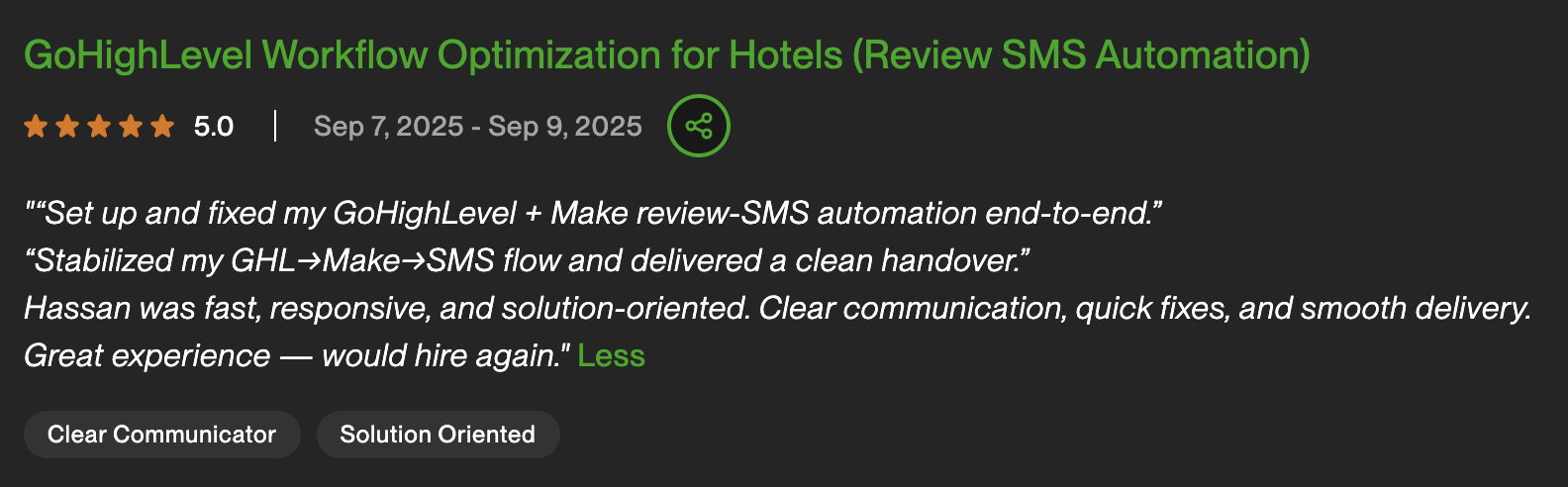
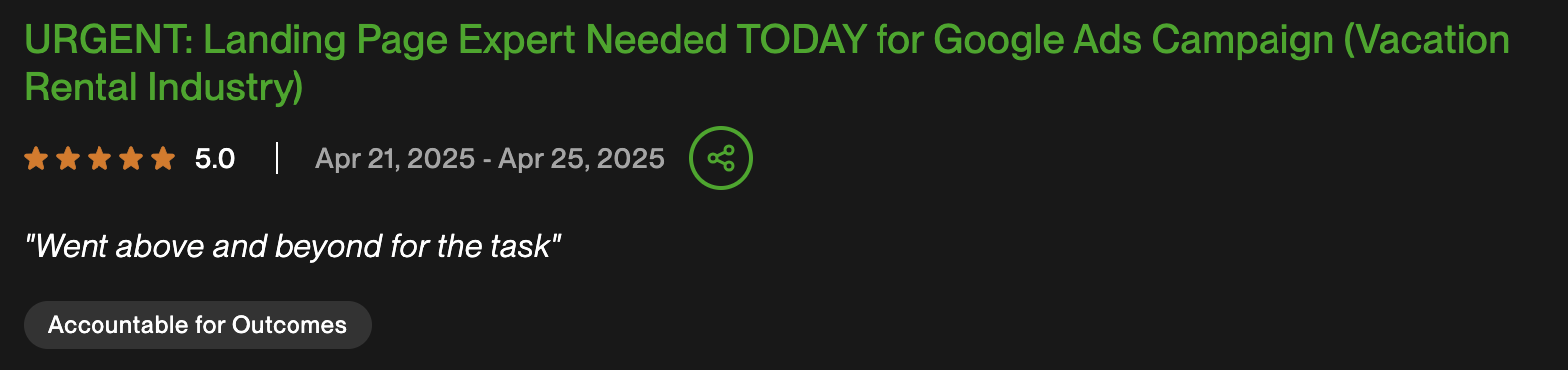
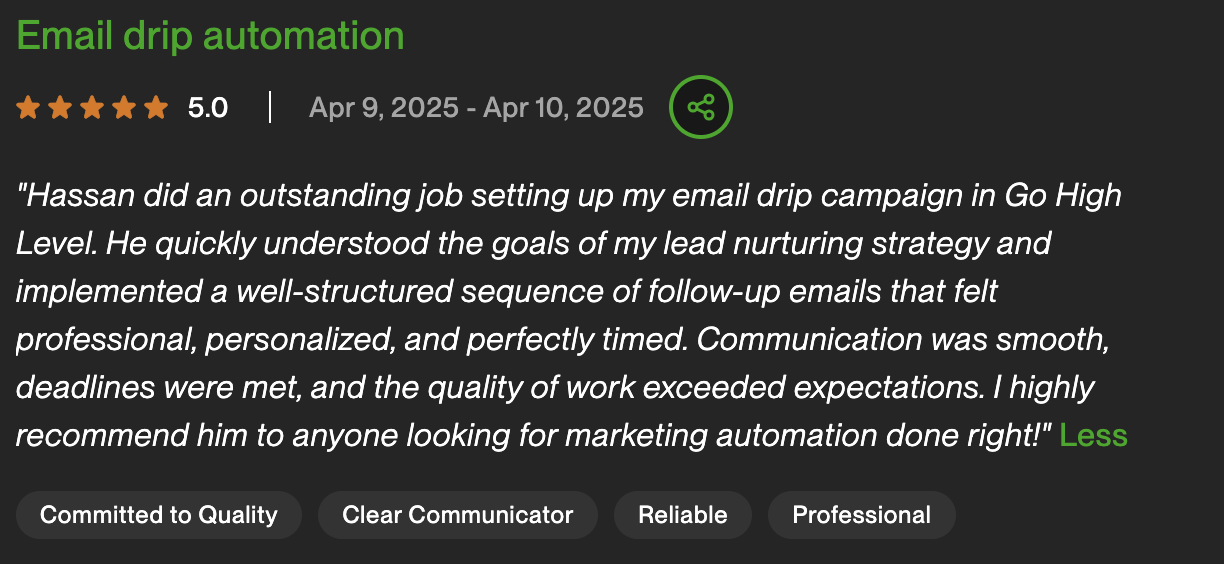
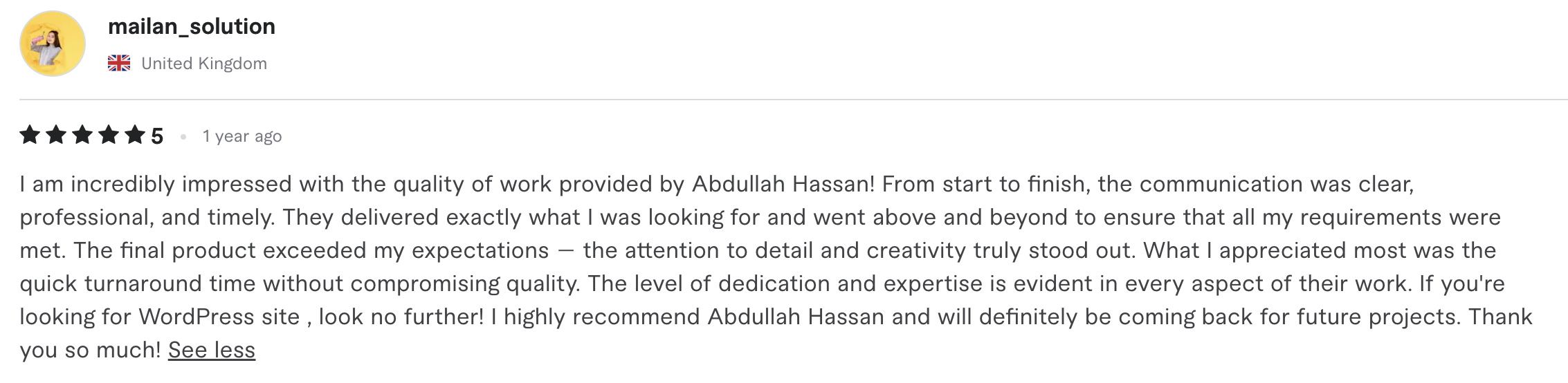
What clients say after their CRM data is fully migrated, verified, and live in the new system.


What Clients Say
Verified reviews from Upwork & Fiverr





DIY Migration vs. Done-For-You — The Real Difference
The risk of a failed DIY migration isn't just lost time — it's corrupted data in your new CRM that takes months to fix. Here's what each approach actually delivers.
| DIY CSV Export | Cheap Freelancer | Best Choice AutomateX360 |
|
|---|---|---|---|
| Pre-migration record audit | None — you don't know what you have | Rarely done | Full record count before we start |
| Notes & activity history | Lost — CSV doesn't capture these | Often skipped | Migrated where platform allows |
| Custom field mapping | Manual — data lands in wrong fields | Basic — misses edge cases | Explicit field map — every property |
| Deduplication | Not done — duplicates created | Basic name matching only | Email + phone + name dedup logic |
| Post-migration verification | None — errors found later by users | Rarely done | Record count + spot-check sampling |
| Support after migration | None | None after delivery | 30 days included |
Industries We Migrate CRM Data For
CRM migration is industry-agnostic — what changes is the pipeline stage structure, custom fields, and relationship mapping we configure in the destination CRM after migration.
CRM Migration FAQ
What does a CRM migration service include?
A complete CRM migration includes: pre-migration audit, field mapping between source and destination CRM, data cleanup (deduplication, standardization), migration of contacts, companies, deals, pipeline stages, notes, activity history, tags, and custom fields, post-migration verification with record count comparison, and 30 days of post-migration support.
Which CRMs do you migrate from and to?
We migrate between GoHighLevel, HubSpot, Salesforce, Pipedrive, Zoho CRM, Keap (Infusionsoft), ActiveCampaign CRM, Monday.com, Airtable, and custom CRMs. Common migrations include: HubSpot → GoHighLevel, Keap → HubSpot, Salesforce → HubSpot, spreadsheet → any CRM, and any CRM → GoHighLevel.
Will I lose any data during migration?
No — data integrity is the primary goal. We count every record type in your source CRM before starting, run the migration, and verify record counts match after completion. We spot-check a sample of migrated records. Any discrepancy is investigated and resolved before we sign off on the migration.
How long does a CRM migration take?
Most migrations are completed in 3-7 days for straightforward data moves. Larger migrations with complex field mapping, data cleanup requirements, or over 50,000 records take 7-14 days. We scope the exact timeline after the pre-migration audit.
Do you clean up duplicate or dirty data?
Yes — data cleanup is included in every migration. We deduplicate contacts, standardize phone and email formats, normalize field values, and flag records with missing data before migrating. You get cleaner data in your new CRM than you had in your old one.
Can you migrate from a spreadsheet to a CRM?
Yes. Spreadsheet-to-CRM migrations are one of the most common project types we handle. We map spreadsheet columns to the correct CRM fields, clean up formatting, deduplicate, and import contacts, companies, and deals so you're starting with a properly structured CRM.
What happens to my existing workflows and automations?
CRM workflows and automations can't be directly migrated — they need to be rebuilt in the destination CRM because the logic is platform-specific. Data migration and automation rebuild are scoped and priced separately. We discuss this clearly on the free audit call so you know exactly what's included.
Do you migrate email history and notes?
We migrate notes, activity logs, and deal history where the destination CRM supports import. Some platforms have limitations on importing historical email activity. We map this out on the pre-migration audit and tell you exactly what will and won't carry over due to platform limitations — before we start.
Start With a Free Migration Audit — Know Exactly What You Have Before We Move It
We review your source CRM, count every record type, assess data quality, and give you a complete migration plan — what gets migrated, in what order, and what the result will look like — before you pay anything.

Not a sales rep. The founder personally delivers every migration. The same person who has migrated 50+ CRMs across 20 industries will migrate yours — with a pre-migration audit, verified transfer, and post-migration sign-off that confirms zero data loss.
What happens on the free CRM Migration audit call (45 min):
- We review your source CRM — what record types you have, approximate counts, custom fields, data quality issues, and what needs to be cleaned up before migration (15 min)
- We map the migration path — which fields go where in the destination CRM, what can be migrated directly, what needs transformation, and what has platform limitations you should know about (15 min)
- We give you a complete migration plan — record types, timeline, field mapping, cleanup scope, and what your new CRM will look like after — whether you hire us or not (15 min)
Your Old CRM Has Years of Data Worth Keeping. Don't Lose It in a DIY Import.
A failed CRM migration creates duplicate contacts, missing notes, broken relationships, and corrupted data that takes months to fix manually. Book your free audit and get a complete migration plan — what moves, what gets cleaned, and what your new CRM looks like when it's done.
Book Free CRM Migration Audit