Hire a Zapier Expert Who Actually Knows What They're Building
Multi-Step Zaps, Paths Logic, Webhooks & 7,000+ App Integrations — Done For You
Zapier connects 7,000+ apps — but "connecting" two apps is not automation. Real Zapier automation involves multi-step Zaps with filters, formatters, Paths branching, webhook configuration, error handling, and logic that makes your data flow correctly between the right apps at the right time. We build it. You stop doing it manually.
Why Self-Built Zaps Keep Breaking — and What You're Actually Missing
Zapier looks simple until your Zap starts firing on the wrong records, sending malformed data, or silently failing with no notification. Here's what actually goes wrong.
Your Zap Runs on Every Record — Not Just the Ones That Should Trigger It
Without filters, a Zap triggers on every form submission, every new CRM contact, every new row — including test data, internal team entries, and records that should never touch that workflow. Without filter logic, you're sending automated messages to the wrong people and creating duplicate records in your destination apps.
You Have Multiple Outcomes but Zapier Only Lets You Build One Linear Path
Most real business workflows have conditions: if this type of lead, do X; if that type, do Y; if a different scenario, do Z. A single-path Zap can't handle this. Without Zapier Paths (multi-branch conditional logic), you end up building 3 separate identical Zaps for each outcome — which creates a maintenance nightmare every time anything changes.
Data Arrives in the Wrong Format and Breaks the Destination App
Phone numbers in one format in your form, a different format required by your CRM. Dates as strings, but your destination needs timestamps. Names split across fields, but the destination needs them combined. Without Formatter by Zapier steps, data lands in the wrong shape — and the destination app rejects it silently, or creates corrupted records you don't discover until weeks later.
Zaps Break Silently — You Don't Know Until Something Is Missing
A Zapier app updates its API and your trigger stops working. Authentication expires on a connected app. A required field gets renamed. Zap errors don't always surface visibly — you discover the problem when a lead isn't in your CRM, an invoice wasn't created, or a Slack notification that should have fired didn't. Error monitoring and notification setup is not optional.
A properly built Zap has filters, formatters, Paths logic, error handling, and monitoring. Here's what we build.
How Your Zapier Automation Gets Built — Live in 7 Days
We map your workflow, design the Zap architecture, build every step, test with real data across all trigger conditions, and hand over a working automation with documentation and monitoring.
Workflow Mapping
We map your current process — what triggers the automation, what apps are involved, what conditions should filter records, what branching outcomes exist, and where the data needs to land.
Zap Architecture
We design the Zap structure — trigger type, filter logic, formatter steps, Paths branches, action sequence — and confirm the design before building. No surprises at delivery.
Build & Connect Apps
We build the complete Zap in your Zapier account, connect all apps with proper authentication, configure each step, and set up error handling and failure notifications.
Test Across All Conditions
We test with real data — including edge cases: records that should trigger, records that should be filtered, data that needs formatting, and all Paths branches. Every outcome verified before activating.
Documentation & Support
We document every Zap with a step-by-step explanation of what it does and why. 30 days of post-launch support included — if a connected app changes or a Zap breaks, we fix it.
What's Included in Every Zapier Build
Not just a connected trigger and action — a complete, tested, monitored Zapier automation specific to your workflow.
Building a Zap is 10 minutes. Building a Zap that reliably processes real business data without breaking, filtering correctly, formatting data properly, and notifying you when something goes wrong is the work. That's what we deliver.
Zapier Features We Build With
Filters by Zapier
Condition-based filters that stop the Zap from running unless specific criteria are met — so automation only fires when it should, not on every trigger event.
Formatter by Zapier
Text, number, date, phone, and name transformations. Data arrives in whatever format your source app uses and lands in exactly the shape your destination app needs.
Paths (Conditional Logic)
Multi-branch Zaps for workflows with different outcomes based on data conditions. One Zap handles multiple scenarios with different actions for each branch.
Webhooks by Zapier
Custom webhook triggers and actions for apps without native Zapier integration. We configure the endpoint, parse the payload, and route data to the right destination.
Looping by Zapier
Process multiple items from a single trigger — loop through a list of contacts, orders, or records and run the same action on each one within a single Zap run.
Delay by Zapier
Time-delayed steps within a Zap — send a follow-up email 2 hours after a form submission, update a record after 24 hours, or create a task 3 days later. All controlled within the Zap.
Zapier vs. Make.com — Which Should You Use?
- You need the widest native app coverage (7,000+ apps)
- Your workflows are relatively linear with simple branching
- Your team needs to manage Zaps without technical knowledge
- Specific apps you need are only on Zapier
- You're connecting popular consumer apps (Google, Slack, Notion)
- You need complex multi-branch logic with iterators
- You're processing high-volume data where cost per task matters
- You need JSON parsing and complex data transformation
- You want a visual scenario builder for complex flows
- Your budget is cost-sensitive and tasks are high volume
Why AutomateX360 for Zapier Automation?
- 200+ Zaps built — from simple 2-step connectors to 15-step multi-app workflows
- Paths, Formatter, Filter, Webhook — we use the full Zapier feature set
- Tested with real data — not just a sample test that passes without real inputs
- 4.9/5 rating across 47 verified reviews on Upwork and Fiverr
- We also fix broken Zaps — not just build new ones
- 30 days post-launch support on every project
Zapier Automation in Action — Real Results
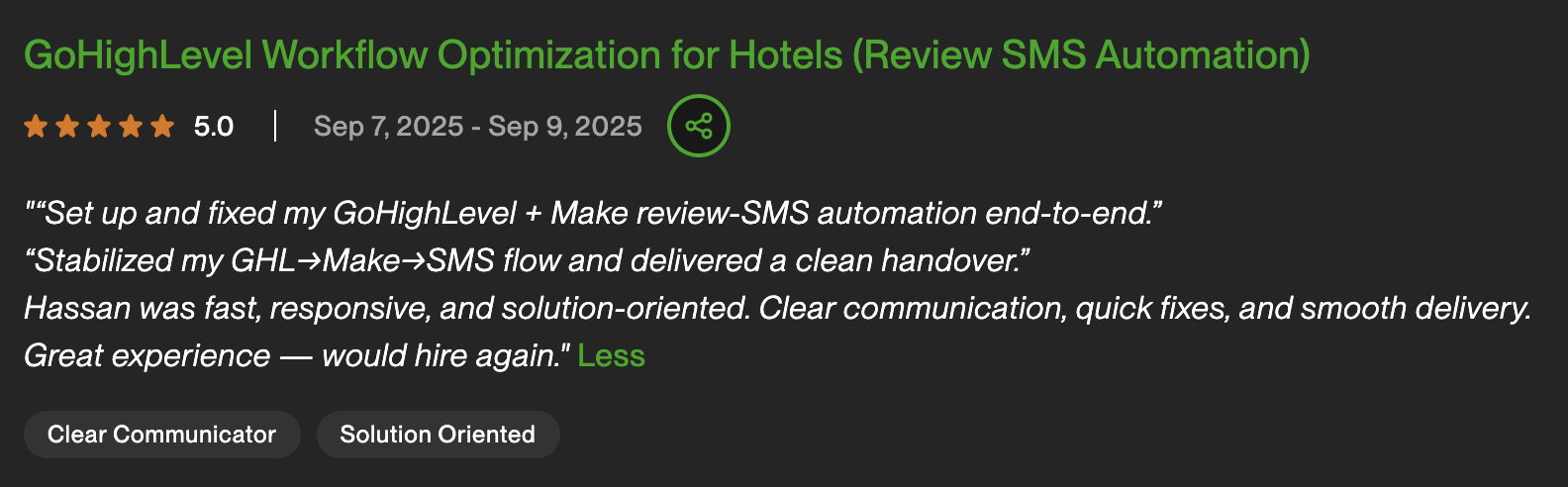
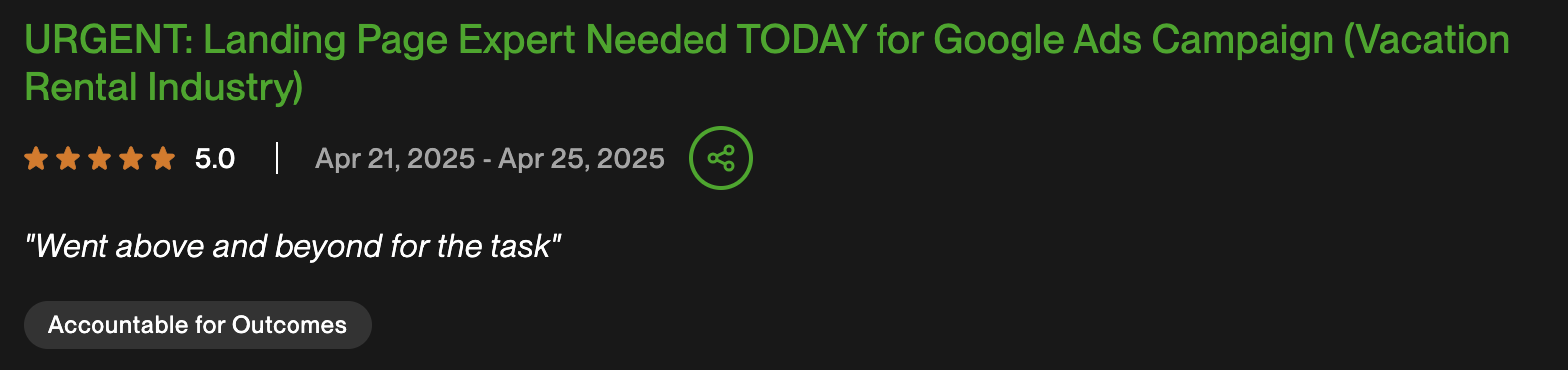
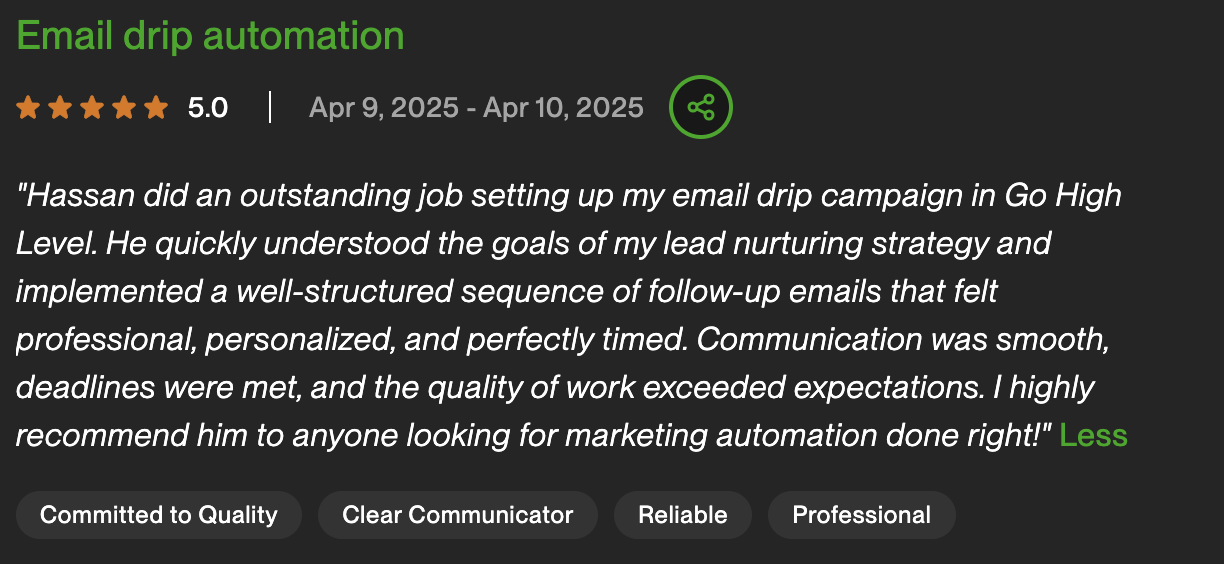
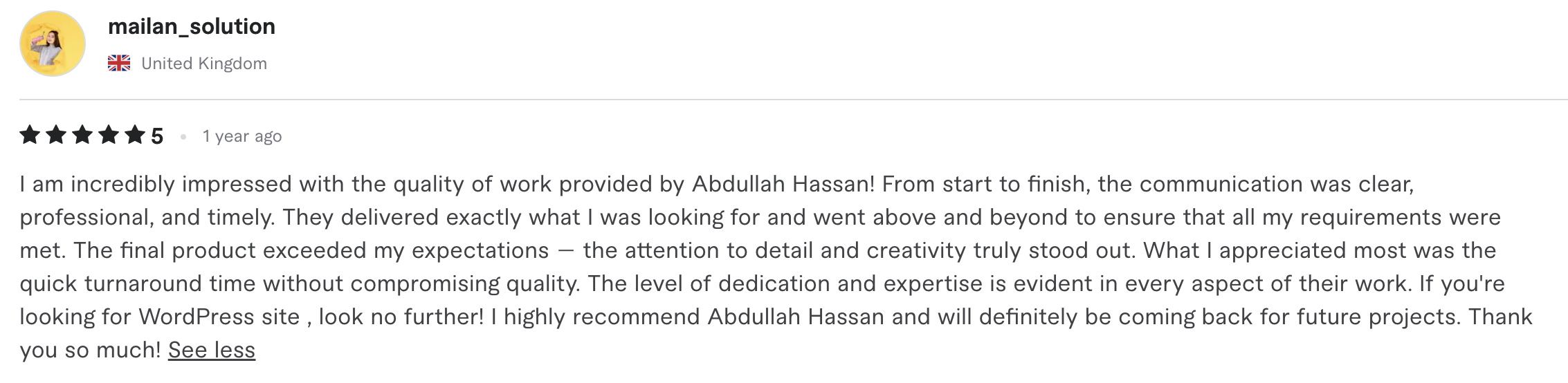
What clients say after their Zapier automation is built, tested, and running reliably.


What Clients Say
Verified reviews from Upwork & Fiverr





Self-Built Zaps vs. Expert-Built — The Real Difference
The difference between a Zap that works in testing and one that reliably handles production data is filter logic, formatter steps, error handling, and proper testing across all conditions.
| DIY Self-Built Zaps | Cheap Freelancer | Best Choice AutomateX360 |
|
|---|---|---|---|
| Filter logic | Often missing — Zap fires on everything | Basic — misses edge cases | Complete — tested against real records |
| Formatter steps | Skipped — data arrives malformed | Minimal — happy path only | All data transformations handled |
| Paths (conditional logic) | Not used — duplicate Zaps instead | Sometimes included | Built correctly — all branches tested |
| Error handling | None — silent failures | Basic email alert only | Configured — you know immediately |
| Testing with real data | Sample test only — breaks in production | Happy path only | Real data + edge cases verified |
| Post-launch support | None — you fix it | Gone after delivery | 30 days included |
Industries We Build Zapier Automation For
Zapier connects any combination of 7,000+ apps — the use cases and workflows we build are specific to your business and industry.
Zapier Automation FAQ
What does a Zapier automation expert do?
A Zapier expert builds reliable multi-step Zaps that connect your business apps without coding. This includes designing trigger-action logic, adding filters (so Zaps only run when they should), formatter steps (to clean and transform data), Paths for conditional branching, webhooks for apps without native support, error handling, and testing with real data before activating.
When should I use Zapier vs. Make.com?
Zapier is better when you need the widest native app library (7,000+ apps), your workflows are relatively linear, or your team needs to manage automations without technical knowledge. Make.com is better for complex branching logic, high-volume data processing, and cost-efficiency at scale. We advise on the right platform on the free audit call.
How long does Zapier automation setup take?
Simple 1-3 step Zaps: 1-3 days. Complex multi-step Zaps with Paths, filters, formatters, and webhooks: 3-7 days. Multi-Zap projects with several interconnected automations: 7-14 days. We scope the exact timeline on the free audit call.
Can you fix Zaps that are already broken?
Yes. Broken Zap diagnosis and repair is a common project type. Common fixes include: authentication errors, filter logic excluding the wrong records, formatter steps producing incorrect output, Paths conditions branching incorrectly, and Zaps sending data to the wrong field. We diagnose, fix, test, and document.
Do you work with specific apps like Salesforce or HubSpot?
Yes. We build Zapier automations across all major business apps — Salesforce, HubSpot, GoHighLevel, Slack, Google Sheets, Gmail, Airtable, Notion, Typeform, Calendly, Stripe, QuickBooks, Mailchimp, Shopify, and 7,000+ other Zapier integrations. We also build webhook-based integrations for apps without native Zapier support.
Will the Zaps keep running after you build them?
Yes — Zaps run continuously on Zapier's infrastructure as long as your Zapier plan is active. Our Zaps include error notification setup so you know if a Zap fails. 30-day post-launch support is included — if a connected app changes its integration in the first 30 days, we fix it at no additional cost.
What Zapier plan do I need?
Zapier's free plan (100 tasks/month, single-step Zaps only) is not sufficient for business use. Multi-step Zaps require Starter plan ($19.99/month). Paths, filters, and most business features require the Professional plan ($49/month). We advise on the right plan for your automation volume and use case on the free audit call — separate from our service fee.
Do you need access to my Zapier account?
Yes — we build Zaps directly in your Zapier account. We'll need collaborator access or account credentials to build, test, and activate your Zaps. All authentication credentials remain yours — we connect the apps using your existing API keys and OAuth connections.
Start With a Free Audit — Map Your Zapier Automation Before We Build It
We review your current workflow, the apps you're connecting, and the outcomes you need — then give you a complete Zapier automation plan before you pay anything. You'll know exactly what gets built, how it works, and what Zapier plan you need.

Not a sales rep. The founder personally delivers every project — the same person who has built 200+ Zapier automations across 20+ industries. You'll leave the audit call with a complete Zap architecture whether you hire us or not.
What happens on the free Zapier Automation audit call (45 min):
- We map your current workflow — what you're doing manually that should be automated, which apps are involved, what trigger events should start the Zap, and what outcomes you need (15 min)
- We design the Zap architecture — trigger type, filter conditions, formatter steps needed, Paths branches if applicable, actions and destination apps — so you can see exactly what gets built (15 min)
- We advise on your Zapier plan, task volume estimate, and give you the complete build specification — whether you hire us or not (15 min)
Stop Building Zaps That Break on Real Data — Get Zapier Automation Built Correctly the First Time
A Zap that works in testing but breaks in production, fires on the wrong records, or sends malformed data to your CRM isn't automation — it's a liability. Book your free audit and get a complete Zapier build plan specific to your workflow, apps, and outcomes.
Book Free Zapier Automation Audit