GoHighLevel Talks to Everything —
When Someone Wires It Correctly
Your CRM shouldn't be an island. We connect GoHighLevel two-way with your payment processor, accounting, field-service software, industry tools, and anything with an API — via native integrations, Make/Zapier/n8n middleware, or custom webhook builds.
Does Any of This Sound Familiar?
If your team retypes the same customer into three systems, these leaks are burning hours and corrupting data every day.
Triple Data Entry Across Disconnected Tools
Every customer gets typed into the CRM, the invoicing tool, and the ops software. Three chances for typos, three versions of the truth.
Your Industry Tool Doesn't 'Do' GHL
Your LOS, FSM, or patient system has no native GHL connection — so the most important data in your business never reaches your follow-up engine.
Zaps That Break Silently
Someone built Zapier connections a year ago. Half still work. Nobody knows which half until a customer complains.
Payments Don't Trigger Anything
A client pays and… nothing happens. No onboarding email, no invoice record, no pipeline update. Revenue events should drive automation.
There’s a better way. Here’s what we built for businesses like yours.
How Integration Builds Work — From Audit to Two-Way Sync
Completely done for you. You don’t need to be technical. We handle every step.
Free Integration Audit
We map your tool stack and identify every manual data hop worth automating.
Architecture Design
Native, middleware, or custom API — we pick the right path per connection.
Build & Wire
Integrations built with field mapping, deduplication, and error handling.
Test With Real Data
Live transactions traced end-to-end across every connected system.
Go Live + Monitor
Deployed with failure alerts — a broken sync notifies us, not your customers.
Your GHL Integration Build — Everything Included
No tools to buy. No developers to manage. One complete done-for-you build.
An integration that silently fails is worse than none. Every build includes the reliability engineering that DIY connections skip.
Integrations We Build Most
Payments — Stripe & Square
Payment received → opportunity won, onboarding triggered, receipt logged, dunning on failures.
Accounting — QuickBooks & Xero
Invoices and payments synced both ways — sales and books finally match.
Field Service — Jobber, Housecall Pro, ServiceTitan
Jobs, statuses, and completions flowing into GHL so follow-up and reviews fire automatically.
Team Tools — Slack & Teams
Hot leads, booked calls, and won deals announced where your team already lives.
Data — Sheets, Airtable & Warehouses
Reporting extracts, bulk updates, and nightly reconciliations without exports.
Custom APIs & Webhooks
Your LOS, EHR-adjacent tools, or proprietary software — if it has an API, we connect it.
Why Choose AutomateX360 for GHL Integrations?
- 100+ GHL builds — we know the API's real behavior, not just its docs
- 4.9/5 rating across 47 verified reviews on Upwork and Fiverr
- Fluent in all three middlewares: Make.com, Zapier, and n8n
- Custom webhook/API builds when no connector exists
- Error handling and monitoring standard — no silent failures
- Every connection documented and handed off
Native & Middleware vs Custom API — How We Choose
Two build paths, different strengths. We pick per connection, not per ideology.
- Fastest to deploy and cheapest to run
- 2,000–7,000 supported apps
- Visual flows your team can read
- Best for standard SaaS connections
- We add the error handling most builds skip
- Real-time (no polling delays)
- Works with any tool that has an API
- Complex logic and transformations
- High-volume without per-task fees
- Powers AI voice agent backends too
Most stacks need both. The free audit maps which connection gets which treatment — and what it'll cost to run monthly.
Real Clients. Real Results.
Watch what clients say after their system goes live — in their own words.


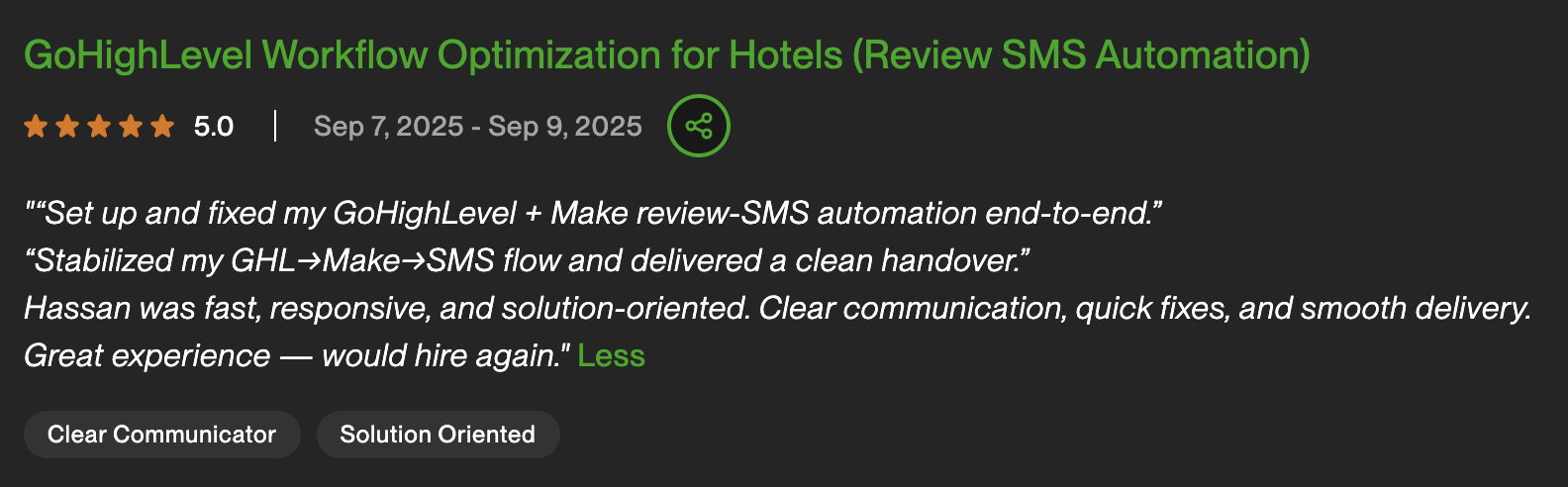
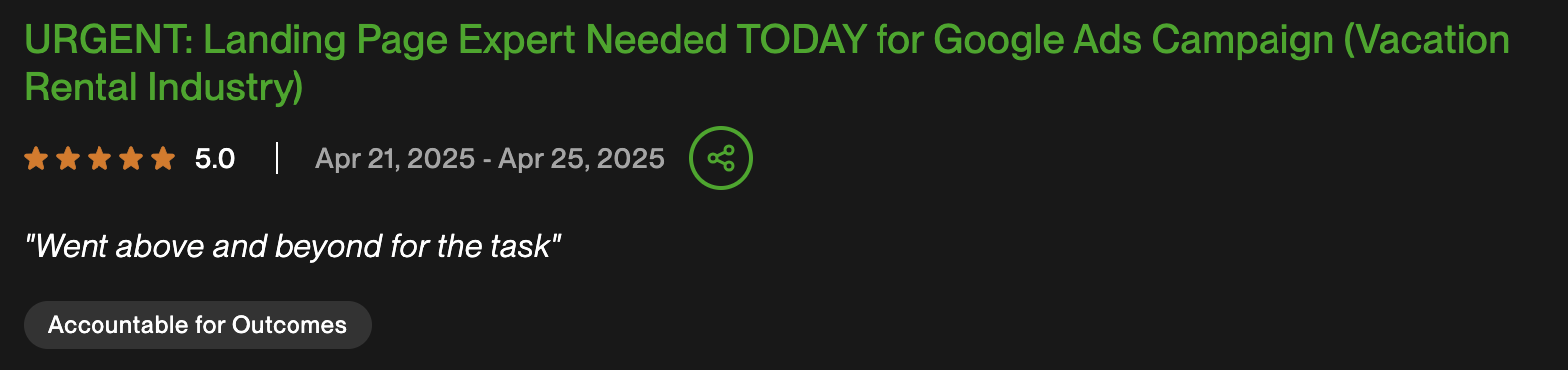
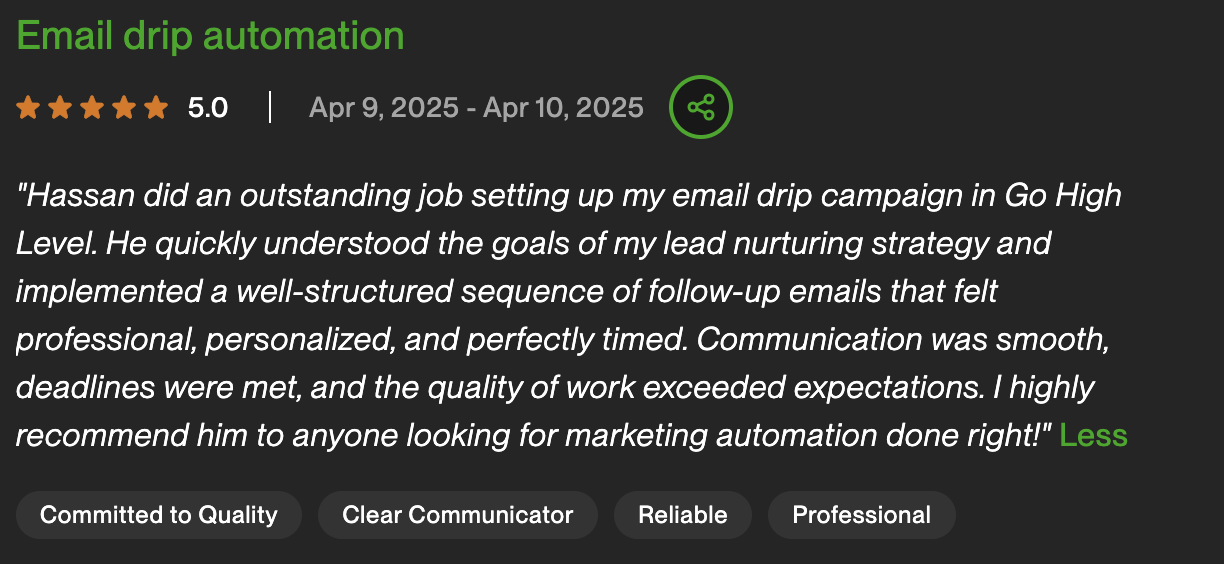
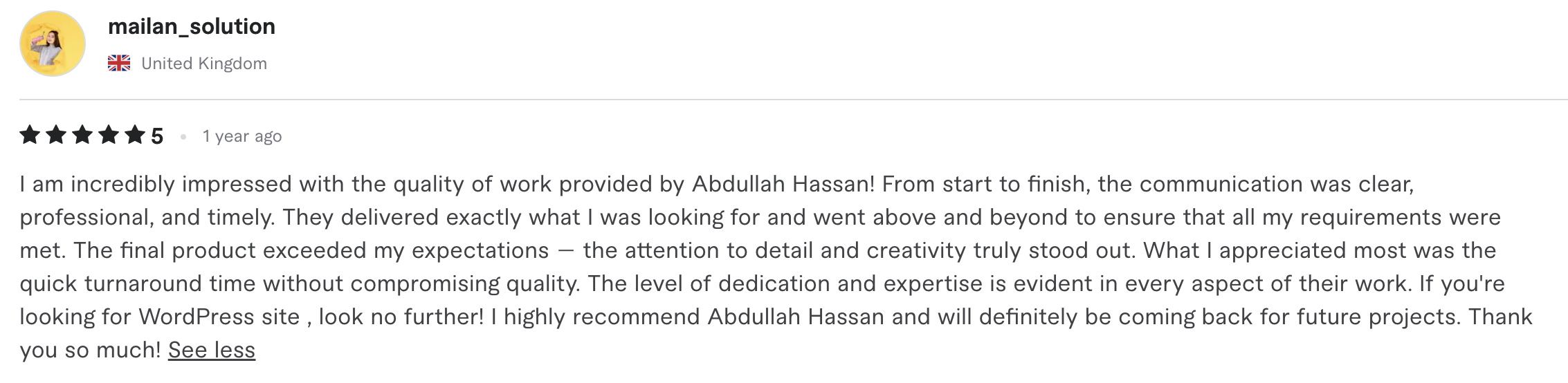
What Clients Say
Real reviews from real clients — verified on Upwork & Fiverr





Why Professional Integration Beats DIY Zaps
Anyone can connect two apps once. Keeping ten connections truthful for years is engineering.
| DIY Yourself | Generic Freelancer | Best Choice AutomateX360 |
|
|---|---|---|---|
| Field mapping | Whatever defaults did | Basic, undocumented | Explicit, documented maps |
| Duplicate handling | Duplicates everywhere | Rarely considered | Dedup rules by design |
| Error behavior | Silent failure | Silent failure | Retries + instant alerts |
| Custom/industry tools | Can't connect them | Out of scope | Custom API builds |
| Two-way sync | One-way at best | Loops & overwrites | Conflict rules defined |
| Documentation | None | None | Every connection mapped |
| Ongoing reliability | You find out last | Gone after delivery | Monitored, 30-day support |
Stacks We Integrate By Industry
Every build is fully customized — flows, qualifiers, and tone tailored to your industry. Not a generic template.
Don’t see your industry? We’ve worked in 20+ verticals. Book a free audit — we’ll tell you if this is the right fit.
GoHighLevel Integration FAQ — Common Questions Answered
What can GoHighLevel integrate with?
Practically anything: natively with mainstream tools (Stripe, Google, Facebook, QuickBooks via connectors), with 7,000+ apps through Zapier/Make/n8n middleware, and with any system that exposes an API or webhooks through custom builds — including industry software like field-service platforms and loan origination systems.
Does GoHighLevel have an API?
Yes — GHL's API (v2) covers contacts, opportunities, calendars, conversations, and more, plus outbound webhooks that fire on events. This is what makes custom two-way integrations possible for tools without native connectors.
Should I use Zapier, Make, or a custom integration?
Depends on the connection: standard SaaS tools at modest volume suit middleware (Make usually beats Zapier on cost); real-time, high-volume, or industry-specific systems justify custom API/webhook builds. Most stacks end up with a mix — we choose per connection on the audit.
Can you sync GoHighLevel two-way with my other CRM or ops tool?
Yes, with explicit conflict rules — which system wins per field when records disagree. Two-way syncs done casually create loops and overwrites; done properly they keep both systems truthful.
What happens when an integration breaks?
Our builds include retry logic for transient API errors and alerting for hard failures — we get notified with full context and usually fix issues before you notice. Every build includes 30 days of post-launch support.
Can you fix the Zapier mess we already have?
Yes — integration rescue is common. We audit existing Zaps/scenarios, kill the dead ones, rebuild the fragile ones with error handling, and often migrate high-volume workloads to cheaper middleware.
How much do GoHighLevel integrations cost?
One-time build fees scoped by connection complexity on the free audit, plus whatever the middleware costs monthly (often under $30 for typical volumes; custom webhooks have no per-task fees). Most clients recover the build cost in eliminated data-entry hours within weeks.
Do you integrate AI tools with GoHighLevel too?
Yes — AI lead scoring writing back to GHL, Claude/GPT-powered data extraction, and the webhook backends behind Vapi/Retell voice agents that read and write GHL data mid-call.
Start With a Free Audit — Zero Risk, Zero Commitment
We show you exactly what your system would look like before you commit to building it.

Not a sales rep. Not an account manager. The person who personally built 100+ AI systems reviews every audit request and runs the call himself.
What happens on the free audit call (45 min):
- We map your current tool stack and every manual data hop between systems (15 min)
- We show you real integration architectures from similar stacks — what connects to what, and how (15 min)
- You get a connection-by-connection plan with build approach and costs — yours to keep either way (15 min)
Your Tools Should Agree With Each Other — Automatically
Every manual data hop is an error waiting to happen and an hour lost weekly. Book the free audit and see your stack's integration map.
Book Free Integration Audit